
Tuesday, February 28, 2012
Monday, December 19, 2011
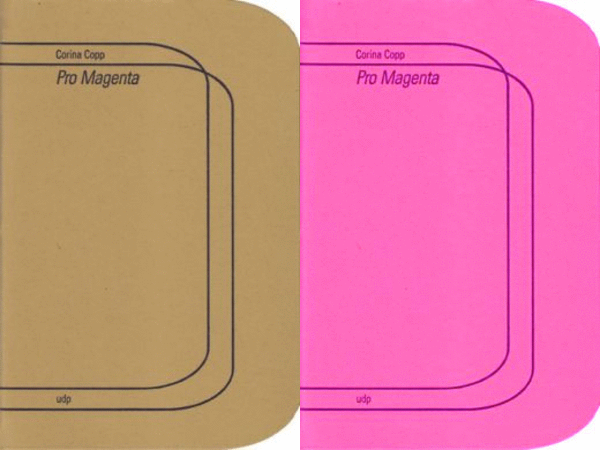
Hello, 2011. Now I can see you. And your books. Which include, thankfully:

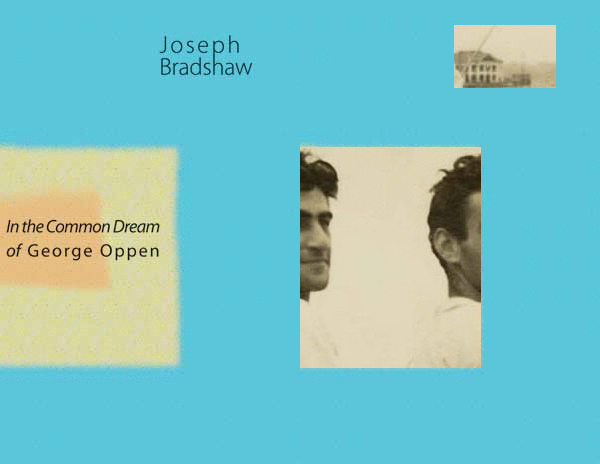 In the Common Dream of George Oppen by Joseph
 Bradshaw
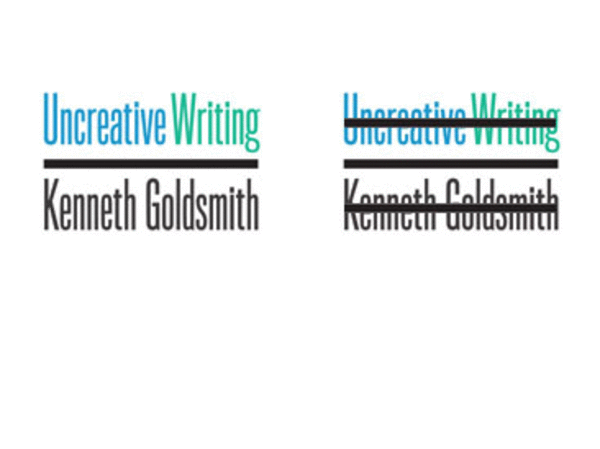 Uncreative Writing by Kenneth Goldsmith
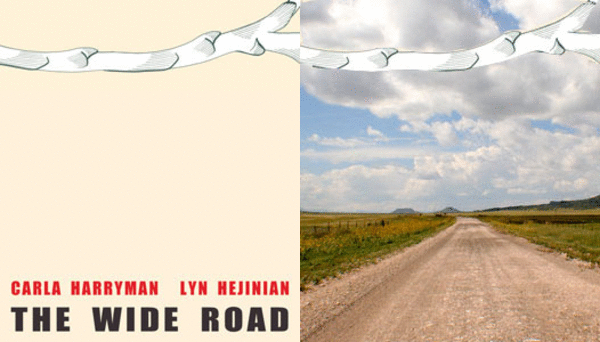 The Wide Road by Carla Harryman and Lyn Hejinian
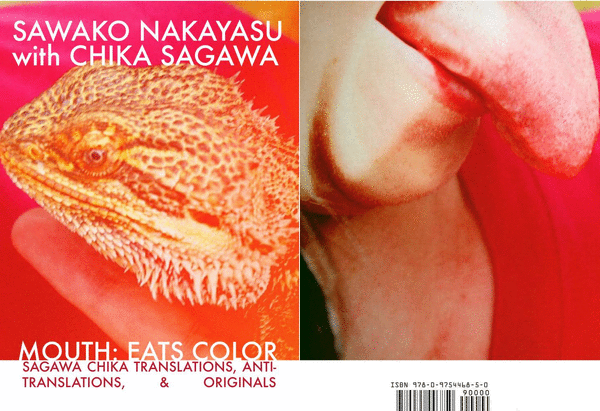 Mouth: Eats Color by Sawako Nakayasu and Chika Sagawa
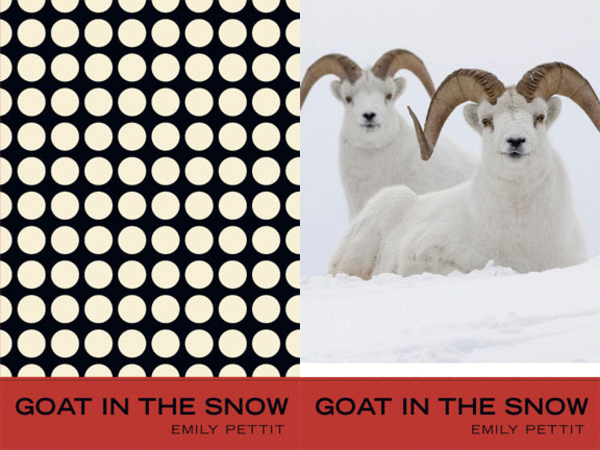 Goat in the Snow by Emily Pettit
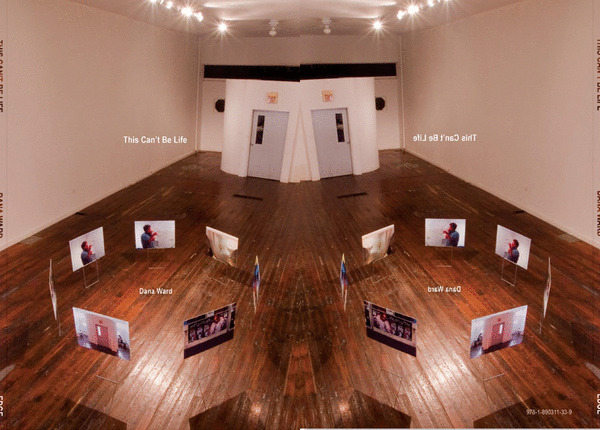 This Can't be Life by Dana Ward
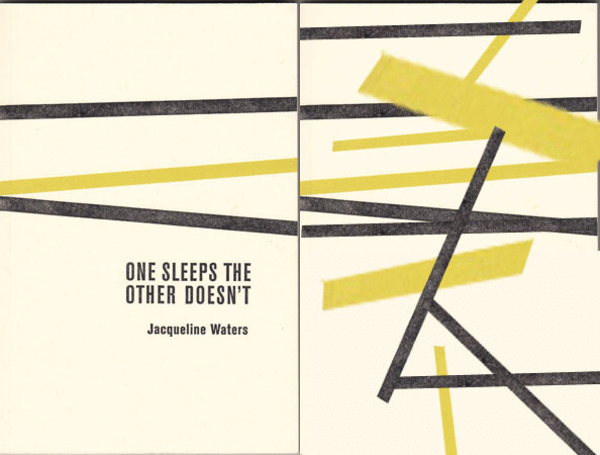 One Sleeps the Other Doesn't by Jacqueline Waters
What Oppen didn't write in those 25 years he didn't.
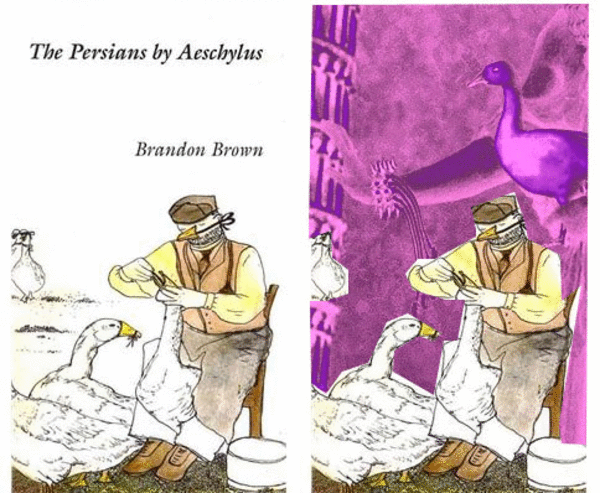
 Uncreative Writing by Kenneth Goldsmith
This is the book people will read if they want to know about Kenneth Goldsmtih forever.
The Wide Road by Carla Harryman and Lyn HejinianWhat they can't do (which isn't much) they can do together.
Mouth: Eats Color by Sawako Nakayasu and Chika SagawaSubtitled: "Translations, Anti-Translations, & Originals." Yes.
Goat in the Snow by Emily PettitIs probably the best person. Even though it's a book.
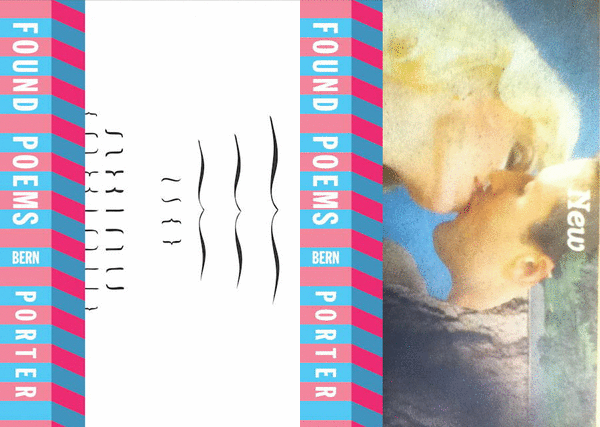
That book by the nuclear scientist who worked on the Manhattan Project who, after the bomb, became a slightly crazed/very lovable/prolific postal-worker who founded the idea of Found Poetry. A re-release. A-ppropriately.
This Can't be Life by Dana WardWhat's there to say about a prophet?
One Sleeps the Other Doesn't by Jacqueline WatersI couldn't get over the first poem until I couldn't get over the last poem.
++++++++Studying Hunger Journals by Bernadette Mayer (Station Hill Press); The Hermit by Laura Solomon (Ugly Duckling Presse); MOTES by Craig Dworkin (Roof Books); Anew: Complete Shorter Poetry by Louis Zukofsky (New Directions); The Hole by Thom Donovan (Displaced Press); Spring and All by William Carlos Williams, introduction by C.D. Wright (New Directions); No, I Will Be in the Woods by Michelle Taransky (Brave Men Press); You and Three Others Are Approaching a Lake by Anna Moschovakis (Coffee House Press); Micrograms by Jorge Carrera Andrade (Wave Books) +++++++

Tuesday, November 22, 2011
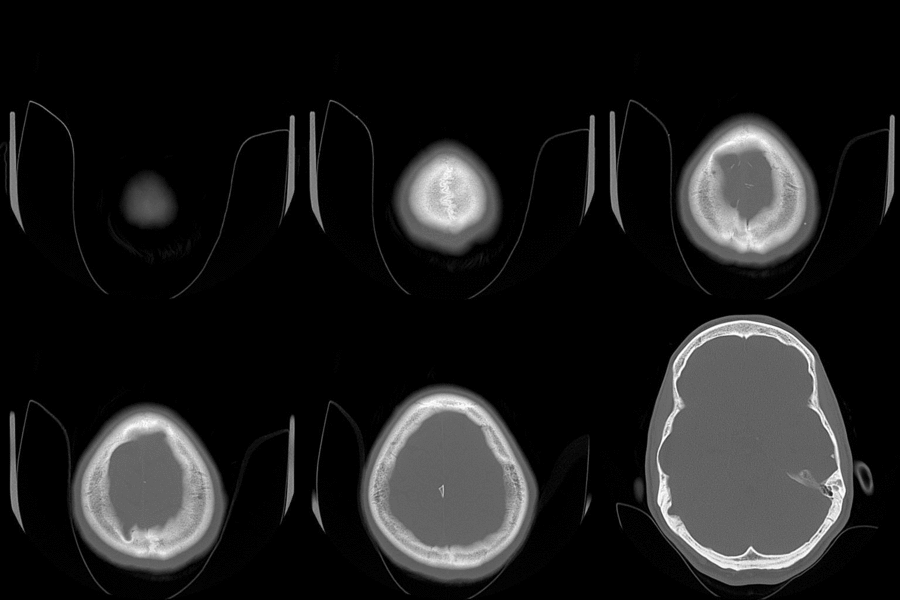
My Brain
I got my first CAT scan tonight. We also finally have the internet in my new apartment. Thus:
Sunday, October 9, 2011
Poetry + Fashion
 Poetry is perhaps the genre most willing to be combined--with prose, visual arts, music, advertising, conversation, etc. Perhaps because it requires no more than a vague textual element--and sometimes less than that--to be included in its "ranks."
Then let us consider fashion as a realm to
 conquer, and seek out the successes of such a pursuit. Like Mallarmé's La Dernière Mode, for example—"one of French literature's greatest enigmas"—a fashion magazine written under multiple pseudonyms at the height of M.'s literary powers.
I lent my copy to a friend, but otherwise I would pepper in some quotations of Mme de Ponty on the seasonlessness of jewels. Or more on her theory that: "A fashionable woman does not suffer financial pressures, because Fashion has, precisely, full power to defeat them...The ‘bon ton’ of Fashion, which forbids it to propose anything aesthetically or morally disgraceful..."

Where do these fields combine, and what strange creatures reign over that glittery Venn intersection--?
Here's where it doesn't get exciting:This is only a challenge in the sense that every question is—and challenges the answerer to appear before it, to mirror its punctuational ¿? with an exclamatory ¡!.
this Clothing Line --> Poetry Fashion
Here's where it gets exciting:
this Tumblr --> Fuckyeahmenswear
Former Vogue editor Diana Vreeland's letters seem to respond with an indirect answer:

"I am extremely disappointed to see that we have used practically no pearls at all in the past few issues...I speak of this very often -- and as soon as I stop speaking the pearls disappear...We are on the verge of a drastic emergency."The poet Lawrence Giffin's "Spinoza's Ethics" seems to respond with a direct answer. And I'm going to respond to my temptation to include the full poem here, by doing that:
Spinoza's Ethics
Black stretch velvet of rayon, silk, and spandex (not shown) cropped to let the sequined scoopneck sleeveless shell of pure silk georgette peek out beneath the hem of black stretch silk and cheetah-print, ruffle-detailed fitted spandex of rose and tan French taffeta, beautifully hued russet, and gold brocade of polyester and rayon with a regal stand collar over classic short-sleeves in golden silk and chocolate polyester of rayon, wool, and spandex, black rayon, and silk burnout velvet with piano fringe, silk charmeuse sleeveless scoopneck shell, and Asian-print silk burnout velvet mandarin-collar and black silk velvet with multicolored beading on an emerald green classic skirtsuit of wool and silk with seaming, two-button detail, and softly curved lapels in sheer floral-print silk over a sleeveless silk dress in black with red border print on ivory pure silk with smocked waist and tie detail over fluid brown silk white cotton crochet bolero jacket with sequined edging and sheer white mesh lining of white sheer lace of rayon and nylon with portrait collar, scalloped edges, and three-quarter sleeves trimmed with black suede and taupe, pink, red, and green floral embroidery of petal-soft featherweight cashmere (specify Rain or Black) and sheer red silk over black elastic-waist silk of stonewashed cotton and spandex with multicolored rhinestones decorating silk chiffon with velvet ribbon inset detail and velvet back-slit rayon and silk (specify Chocolate or Black) or classic with pleated detail imported of triacetate and polyester camel and black scroll-print cashmere with cascading ruffle-edge detailing in Italian wool tissue crepe in dark ginger magnolia print on cotton and silk knit jewel-neck of Italian wool and beautifully draped cashmere double-faced wool in oatmeal and ivory in polyester, wool, and supple suede with seam detail (specify Red Maple, Chocolate, Cedar, or Black) of finely knit rayon and Lycra of viscose and wool of toffee melton mélange of pure Italian wool, wheat merino wool, camel hair, and spandex of rayon, nylon, and spandex in a supple suede panel-blocked three-button blazer with full lining printed matelassé of cotton and silk and white shantung pants of polyester and pima cotton with detail in a winter white mock-turtleneck of imported cotton and pink finely knit with black tulle ruffle trim, interlaced satin ribbon, scalloped edges, faux-pearl of cotton, and removable corsage detail of rayon leopard-print in pure camel and red lightweight ruffled-edge cashmere of whiskey brown knitted natural mink from China of wool, acrylic, and alpaca with black ribbed wooden-bead detail mesh inset of rayon and cotton across mahogany brown fluid full-leg pants with cheetah-print single-button long cardigan with brown trim and matching scarf and brown fit-and-flare pants of Italian leather encrusted with crystals and rose logo detailing on black quilted leather with detachable dyed rabbit-fur collar with scalloped trim, delicate smoking, and ruffles at the wrists of classic black stretch silk crepe detailing black rayon with ivory silk waterfall-hem turtleneck and autumn suiting must-haves in refined wool flannel pleated ivory and grey scroll-detailed chenille shirtdress of rayon, silk, wool, and Lycra in black crocodile-embossed leather white cotton voile shirt with stand collar and ruched detail of pumice and a geometric-print of pure silk and ribbon-cut brown leather pink cashmere with crystal kitty detail on a classic fisherman's sweater in plush cashmere with rolled-edge detail and baby-cable cashmere with ribbed sleeves and back over espresso wool knit asymmetrical top and matching pants and wheat bouclé shawl-collar micro-stretch jacket in chocolate godet-pleated crepe of pure Italian wool (specify Nouvaeau Blue, Camel, or Heathered Grey) in an oversized, deeply V'd boyfriend sweater (specify Malachite, Hazelnut Heather, or Black) with broken-cable detailing (specify Toffee Apple, Nori Green, or Wheat) with seam detail (specify Artichoke, Blood Orange, or Chanterelle) with contrast whipstitching (specify Plum/Garnet or Espresso/Putty) with a contrasting black bateau-neck underlayer in petal-soft cashmere with detachable hood and elasticized drawstring in a vibrant mix of colors and patterns complemented by hand embroidery and faux-coin accents of heathered black mélange linen glistening with cubic zirconia accessories beautifully draped in red and black dash print with twisted bodice detail.
The impossible outfit is the one most suited to the emperor. If we can't wear it, then it doesn't exist. Put it on.
Wednesday, August 31, 2011
Poems Up

I have some "translations" of Apollinaire up at Notnostrums with these folks:

--there for the picking, if you want or haven't and want.
Thursday, August 4, 2011
Essay
by Bernadette Mayer
I guess it’s too late to live on the farm
I guess it’s too late to move to a farm
I guess it’s too late to start farming
I guess it’s too late to begin farming
I guess we’ll never have a farm
I guess we’re too old to do farming
I guess we couldn’t afford to buy a farm anyway
I guess we’re not suited to being farmers
I guess we’ll never have a farm now
I guess farming is not in the cards now
I guess Lewis wouldn’t make a good farmer
I guess I can’t expect we’ll ever have a farm now
I guess I’ll have to give up all my dreams of being a farmer
I guess I’ll never be a farmer now
We couldn’t get a farm anyway though Allen Ginsberg got one late in life
Maybe someday I’ll have a big garden
I guess farming is really out
Feeding the pigs and the chickens, walking between miles of rows of crops
I guess farming is just too difficult
We’ll never have a farm
Too much work and still to be poets
Who are the farmer poets
Was there ever a poet who had a self-sufficient farm
Flannery O’Connor raised peacocks
And Wendell Berry has a farm
Faulkner may have farmed a little
And Robert Frost had farmland
And someone told me Samuel Beckett farmed
Very few poets are real farmers
If William Carlos Williams could be a doctor and Charlie Vermont too,
Why not a poet who was also a farmer
Of course there was Brook Farm
And Virgil raised bees
Perhaps some poets of the past were overseers of farmers
I guess poets tend to live more momentarily
Than life on a farm would allow
You could never leave the farm to give a reading
Or to go to a lecture by Emerson in Concord
I don’t want to be a farmer but my mother was right
I should never have tried to rise out of the proletariat
Unless I can convince myself as Satan argues with Eve
That we are among a proletariat of poets of all the classes
Each ill-paid and surviving on nothing
Or on as little as one needs to survive
Steadfast as any farmer and fixed as the stars
Tenants of a vision we rent out endlessly
Wednesday, July 27, 2011
Web-Palaces
Has it been long enough to claim antiquity from the nineties? Of course. It's been long enough to claim that from yesterday's status updates--context often evaporates faster than you can respond. But here I want to look into one specific relic, namely:
 The above image is the logo for "Erin Marie's Poetry Palace!": http://www.cswnet.com/~erin/, a website dedicated to housing a collection of poems, jokes, and Fun Javascripts, like this Tic Tac Toe "app":
 I played it on 'Hard,' despite the warning. And, predictably, there was no winner.
One page collects a selection of "Young American Poets and Their Poetry," including Gerald Costanzo, Gibbons Ruark, and W. S. Di Piero. A young Daniel Mark Epstein begins one of the poems presented there, "At the Millinery Shop":

This has, perhaps, a purer beauty. While the poet fades, his or her work scatters, multiplies, lives on, emits nothing, prophesies.
This site is, by necessity, out-of-date. And that is where its blessedness roots--in this little palace, where time shifts visibly. Ye Olde Poesie is often blessed in the same way. Look at it >
The above image is the logo for "Erin Marie's Poetry Palace!": http://www.cswnet.com/~erin/, a website dedicated to housing a collection of poems, jokes, and Fun Javascripts, like this Tic Tac Toe "app":I played it on 'Hard,' despite the warning. And, predictably, there was no winner.One page collects a selection of "Young American Poets and Their Poetry," including Gerald Costanzo, Gibbons Ruark, and W. S. Di Piero. A young Daniel Mark Epstein begins one of the poems presented there, "At the Millinery Shop":
I wish I had one of those. Because then I might be able to decide whether I should try to describe the uncanny nature of the text-box on Erin's home page that fills as you scroll over a new link. After the field is populated, you can use your cursor to adjust the text. But it changes as soon as the mouse moves to something else. The interaction is more ephemeral than a google search, and yet it is still an interaction--with Erin.She wants what no clerk in the city can bring her,
a hat that will make up her mind.
This has, perhaps, a purer beauty. While the poet fades, his or her work scatters, multiplies, lives on, emits nothing, prophesies.
This site is, by necessity, out-of-date. And that is where its blessedness roots--in this little palace, where time shifts visibly. Ye Olde Poesie is often blessed in the same way. Look at it >
Thursday, July 21, 2011
Sea Ranch Popsickle Island
In case you're wondering what the words in this subject line mean, let me tell you:

*A bookfair? Well, there will be one of those there too.
FRIDAY
- Sea Ranch, issue 3 (a biannual journal (featuring a bipolar collection (of two poets (Chris Martin & me)))) is out and coming out tomorrow @ Friday @ 7:00 p.m. @ Unnameable Books, thanks to the duo (Alan Felsenthal & Ben Estes) over at The Song Cave.
- Popsickle 2011, Brooklyn's 2nd annual summer literary festival, is going (though it deserves a more active verb and preposition) down on Saturday from 1-8pm @ the Gowanus Ballroom with too many good ones to name (like Lonely Christopher, Dottie Lasky, Paul Foster Johnson—to name a few.
A will happen immediately following the 7:45pm reading finale slot with Ariana Reines, Jason Daniel Schwartz & me. What else would you want*?

SATURDAY
*A bookfair? Well, there will be one of those there too.
Wednesday, July 6, 2011
The Other Poems
Speaking of the future of American poetry (I can begin with this prepositional statement, because it is always what one was previously speaking of, if only metaphorically), in the near future of it, this new Fence book will be out.
I've made the obligatory Book Trailer, and so I present it to you herewith:
Timothy Donnelly writes:

*Another this that you could do is ask for a free Advanced Reader's Copy [[from] fence.fencebooks@gmail.com]**
**Sometimes if someone does that he or she does something with it but doesn't have to.
I've made the obligatory Book Trailer, and so I present it to you herewith:
Timothy Donnelly writes:
With The Other Poems Paul Legault has produced a brilliant sonnet sequence that calls to mind the dizzying cinema of Busby Berkeley as much as it does the inexhaustibly inventive rhetorical contraptions of Shakespeare or Sidney. Rustling together a cast of hundreds as disparate as Sartre, Dolly Parton, The Little Chair under Water, Québec, Caliban, and Women with Unconventionally Long Hair, Legault has staged a spectacular form of existential sketch comedy that, for all its slapstick bleakness, proves surprisingly intent on “exploring joy and its intricacies.” Even as its characters drop such deflated zingers as “The duality of progress will deter us, / but from what exactly?” or else announce, with art-house taedium vitae, “I am going to watch a movie for a class. / Then I will eventually grow old and die,” the ultimate objective of The Other Poems is the pursuit of its own happiness—one cobbled together with extraordinary resourcefulness, spirit, ingenuity, and focus—and to show, by example, how we might each of us bask in the Klieg lights of our own devising.You can do this*, if you want:
*Another this that you could do is ask for a free Advanced Reader's Copy [[from] fence.fencebooks@gmail.com]**
**Sometimes if someone does that he or she does something with it but doesn't have to.
Saturday, July 2, 2011
Ventrakl by Christian Hawkey
 If you read the subject of this post and thought it might be about what I think about Christian Hawkey's new book, Ventrakl, and want to know what that is, you can do that by checking out this review on Jacket2.
I don't like that that rhymes, but I'm too tired* to do anything about it.**

*<--I went to the beach today
**Apparently not too tired to make this .gif
Monday, June 27, 2011
Everybook
 Poets House* is the kind of place I start to feel guilty about if I haven't gone to it in a while. It's like visiting your grandma's (the more intense one's) house, except she isn't there, and you can just hang out in her library, and feel a general wave of encouragement, and get your dose of that everything-is-ok feeling.
So, for those of you, like me, who have been neglectful, or who have not been neglectful because you don't yet know about Poets House (that's a different kind of larger metro-neglect) tomorrow night is the launch of its 2011 SHOWCASE which, based on last year's numbers, will feature more than 2,000 books of poetry—all published this year.
Not only will they be there, I'll be there too** And everybody else.
Maggie, the librarian, is waiting for you. You're waiting for you.
*Plug: I'll be part of the showcase reading on Th. 7/14
** Plug 2: Not only that, but once this launches, you'll be able to search their online directory and find everything still there, waiting for you at Poets House .
Tuesday, May 3, 2011
John Ashbery Round-Up
I don't even know. I don't expect to.
A translation of Ashbery's poem, "Daffy Duck in Hollywood"
I guess.
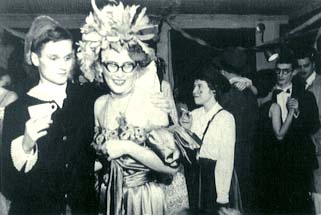 John—in what David Lehman calls "party mode."
This is dark.
Thursday, March 31, 2011
Wednesday, March 30, 2011
Celebrity Poets
 A few questions: Can we hurry up and sell-out already? Do we have to have sold-out in a different medium in order to write a marketable book of poetry? Did you know that Billy Collins's first book of poetry was called Poker Face?
Or, as Anne Carson suggests, I'm not sure if we can avoid it. We've already sold out--and were willing to do it for free. Or, rather, for true love:
Do we have to go back to being romantics again in order to secure a larger audience? Or is that itself the problem?
That primal dove that rises above the golden heap will be our mascot! We will race forward into a new era of the essence distilled. Spring shall be our flag and Death shall be what happens to these leaves that we notice, most acutely, in autumn. O, forlorn departments, weep for me. O, dire merchant, spurn us. Let us keep us in the arms of poesie.
Is there another sort of love that the masses love?
Q: What does everyone love?
A: Yoko Ono.
Oh, Yoko:
(I'm sorry about that. Rinse:
)
I've been having this circular conversation a lot lately. My solution is this poem:

If you would like to give me money, please interact with this "poem." I am not actively asking for money except in the sense that I am the poet putting on the persona of one seeking money. I ask your assistance in language, but not in actuality. The 'I' of this poem is not 'I.'
Thursday, March 24, 2011
The Other Poems
 For the sake of your radar, I just wanted to announce that my second book received the Fence Modern Poets Series Prize and will be coming out this Fall 2011 from, well, Fence Books.
Things you may want to potentially know / do:
1. There's a cover. / Look at it.

2. There are some sample poems. / Read them.
3. Marjorie Perloff likes it. / Like it.
Sunday, February 13, 2011

Wednesday, February 2, 2011
Elizabeth Bishop Round-Up
Who gave this man a key to her house?
Blame it on the Amelie soundtrack or the legos, but I'm moved.
 Aw, look at those old fruitcakes.
This makes me extremely nervous.
"It's a literary reference."
Sunday, January 16, 2011
Elegy

According to the internet—a lot of things these days seem to fall appropriately under that prepositional phrase—the best way to deal with the loss of a pet is through uncomfortable puns and poorly written poetry:
I actually find the repetition of 'go' in this stanza effective and uncomfortably moving.Time to Go
The time has come I think you know
the Lord is calling so I must go
I love you so much; I wish it wasn't so
I wish I could stay; I don't want to go

I guess that uncomfortability is one of the internet's main themes. For example, I am now going to post a tribute video for my cat, which you will feel guilty for not watching all the way through, even though it is uncomfortably long:
Just for those of you who might have to face the same burden of grief that I have learned to bear forth after the lost of my cat Buster, I wanted to recommend Christopher Smart's tribute to his cat Jeoffry*. I know you know it already. Memory is useful in these times.
The autobiographical nature persistent in the work of amateur poets universally suggests poetry's utility as an art of emotional export. The autobiographical nature persistent in the work of our masters is a comfort in the face of the possible death/rebirth of poetry.
If you feel up for the former sometimes, me too:
The Lord is calling now I must go*I would also like to remind that audience that this is a section from Smart's larger insane masterpiece Jubilate Agno. It's good.
but before I go I want you to know
I know it hurts to lose a friend
but I'll always be with you even to the end.**
**written by John Quealy
Monday, December 27, 2010
10 for '10
A round-up of some of the most striking experimental translations of the year:
Ventrakl by Christian Hawkey
One of the more interesting books of 2010 in general, Hawkey's writings-through/with/around the notoriously hermetic verse of Austrian poet George Trakl takes Jack Spicer's ideas in After Lorca, detonates them, and fills in the gaps with archival photographs, biographical information, imagined interviews, and poems that expose the originality of their "translator."
 O Resplandor by Erin Mouré
One of Christian Hawkey's favorite books of the year, this work by Canadian poet Erin Mouré accomplishes the same feat as her Sheep’s Vigil by a Fervent Person—in which she adds another persona to Pessoa's retinue, setting the original Portuguese against a specifically North American-based English. Here, she takes on the work of numerous poets and poems—with titles, charmingly enough, like "The Paul Celan Translations by Erín Moure." Read an interview with Erin >
Tracelanguage by Mark Goldstein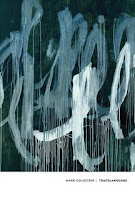
More Bookthug Publishing here. More Celan here—and, at the same time, less of it. Mark Goldstein's second collection of homophonic translations from the German (his last being After Rilke) removes Celan in order to replace him with a series of short lyrics—what Goldstein calls "a transtranslation"—infested with the ur-poet.
 5 Meters of Poems by Carlos Oquendo de Amat, translated by Alejandro de Acosta and Joshua Beckman
The original poems being a critical avant-garde text from the Peruvian modernist, pair that with Beckman's playful sense of the lyric and Ugly Duckling's gorgeous accordion-foldout printing, and you get a beautiful example of why reappropriation/translation is the key to all poetic growth.
 The Dickinson Composites by Jen Bervin
I haven't been able to fork up the $2,000 to get a hold of one of these titleless boxes of Emily Dickinson's punctuation marks sewed into quilts and documented herewith, but it's clearly one of the more interesting transcreations of the year—the unpublished become the nearly unpublishable published (by Granary Books).
 The Microscripts by Robert Walser, translated by Susan Bernofsky
Speaking of the unpublishable, these densely packed texts were written on strips of paper in a shorthand less than 2 millimeters high, presumed to be undecodifiable until an insane critic came in and unraveled the code. Bernofsky unravels them further into the short poem-stories they are and are not.
Meddle English by Caroline Bergvall
Selected works are tricky, but Bergvall's oeuvre is so expansive that it invites this sort of wrangling for the purposes of new readers of this seminal, yet still in many ways overlooked, conceptual poet. Her abbreviated versions of Chaucer's Canterbury Tales would make you run to get the original if they weren't so transfixing in their own rite. But there's more, and then more than that.
 Johnny 23 by Charles Burns
When I asked Charles Burns to sign my copy of this limited edition copy of Johnny 23 written in Alien script at the Brooklyn Comic-Con, I called it a translation, and he specifically said it wasn't. Nonetheless it belongs on this list. Whether you're an avid fan of children's cereal/boy-girl-scout decoders or not, there's still a distinct pleasure to be derived from invented nerd-languages. And the draftsmanship is typically amazing.
 The Book of Genesis by R. Crumb
"It's hard to draw God," says the famed illustrator R. Crumb regarding his recent adaptation of the Bible. If the original text didn't strike the fear of the grand creator into you, then this comic-master's black and white sketched version will catch you up on why the God of the Jews is the dark source of beauty itself. Technically, this is a late 2009 publication. Whatever—it's timeless.
 A Hemingway Reader by Robert Fitterman
Though Rob the Plagiarist was published in 2009 as well, Fitterman recently republished it, along with the rest of his collected works, on his website. "A Hemingway Reader" was in said book, but here it is on its own—in all its compiled-Hemingway-sentences-from-The-Sun-Also-Rises-that-begin-in-the-first-person glory. The above link is a .pdf, so put it on your iPad and get ready for the future of literature.
Ventrakl by Christian Hawkey

One of the more interesting books of 2010 in general, Hawkey's writings-through/with/around the notoriously hermetic verse of Austrian poet George Trakl takes Jack Spicer's ideas in After Lorca, detonates them, and fills in the gaps with archival photographs, biographical information, imagined interviews, and poems that expose the originality of their "translator."
 O Resplandor by Erin Mouré
One of Christian Hawkey's favorite books of the year, this work by Canadian poet Erin Mouré accomplishes the same feat as her Sheep’s Vigil by a Fervent Person—in which she adds another persona to Pessoa's retinue, setting the original Portuguese against a specifically North American-based English. Here, she takes on the work of numerous poets and poems—with titles, charmingly enough, like "The Paul Celan Translations by Erín Moure." Read an interview with Erin >
Tracelanguage by Mark Goldstein

More Bookthug Publishing here. More Celan here—and, at the same time, less of it. Mark Goldstein's second collection of homophonic translations from the German (his last being After Rilke) removes Celan in order to replace him with a series of short lyrics—what Goldstein calls "a transtranslation"—infested with the ur-poet.
 5 Meters of Poems by Carlos Oquendo de Amat, translated by Alejandro de Acosta and Joshua Beckman
The original poems being a critical avant-garde text from the Peruvian modernist, pair that with Beckman's playful sense of the lyric and Ugly Duckling's gorgeous accordion-foldout printing, and you get a beautiful example of why reappropriation/translation is the key to all poetic growth.
The Dickinson Composites by Jen Bervin I haven't been able to fork up the $2,000 to get a hold of one of these titleless boxes of Emily Dickinson's punctuation marks sewed into quilts and documented herewith, but it's clearly one of the more interesting transcreations of the year—the unpublished become the nearly unpublishable published (by Granary Books).
 The Microscripts by Robert Walser, translated by Susan Bernofsky
Speaking of the unpublishable, these densely packed texts were written on strips of paper in a shorthand less than 2 millimeters high, presumed to be undecodifiable until an insane critic came in and unraveled the code. Bernofsky unravels them further into the short poem-stories they are and are not.
Meddle English by Caroline Bergvall

Selected works are tricky, but Bergvall's oeuvre is so expansive that it invites this sort of wrangling for the purposes of new readers of this seminal, yet still in many ways overlooked, conceptual poet. Her abbreviated versions of Chaucer's Canterbury Tales would make you run to get the original if they weren't so transfixing in their own rite. But there's more, and then more than that.
 Johnny 23 by Charles Burns
When I asked Charles Burns to sign my copy of this limited edition copy of Johnny 23 written in Alien script at the Brooklyn Comic-Con, I called it a translation, and he specifically said it wasn't. Nonetheless it belongs on this list. Whether you're an avid fan of children's cereal/boy-girl-scout decoders or not, there's still a distinct pleasure to be derived from invented nerd-languages. And the draftsmanship is typically amazing.
 The Book of Genesis by R. Crumb
"It's hard to draw God," says the famed illustrator R. Crumb regarding his recent adaptation of the Bible. If the original text didn't strike the fear of the grand creator into you, then this comic-master's black and white sketched version will catch you up on why the God of the Jews is the dark source of beauty itself. Technically, this is a late 2009 publication. Whatever—it's timeless.
 A Hemingway Reader by Robert Fitterman
Though Rob the Plagiarist was published in 2009 as well, Fitterman recently republished it, along with the rest of his collected works, on his website. "A Hemingway Reader" was in said book, but here it is on its own—in all its compiled-Hemingway-sentences-from-The-Sun-Also-Rises-that-begin-in-the-first-person glory. The above link is a .pdf, so put it on your iPad and get ready for the future of literature.
Subscribe to:
Posts (Atom)